
The clown is a universal and timeless figure, rooted in collective folklore and immediately recognizable. Behind the forced smile and playful aesthetic, it embodies the ambiguity between entertainment and unease, becoming a symbol of an eternal mask that reflects the contradictions of human nature.
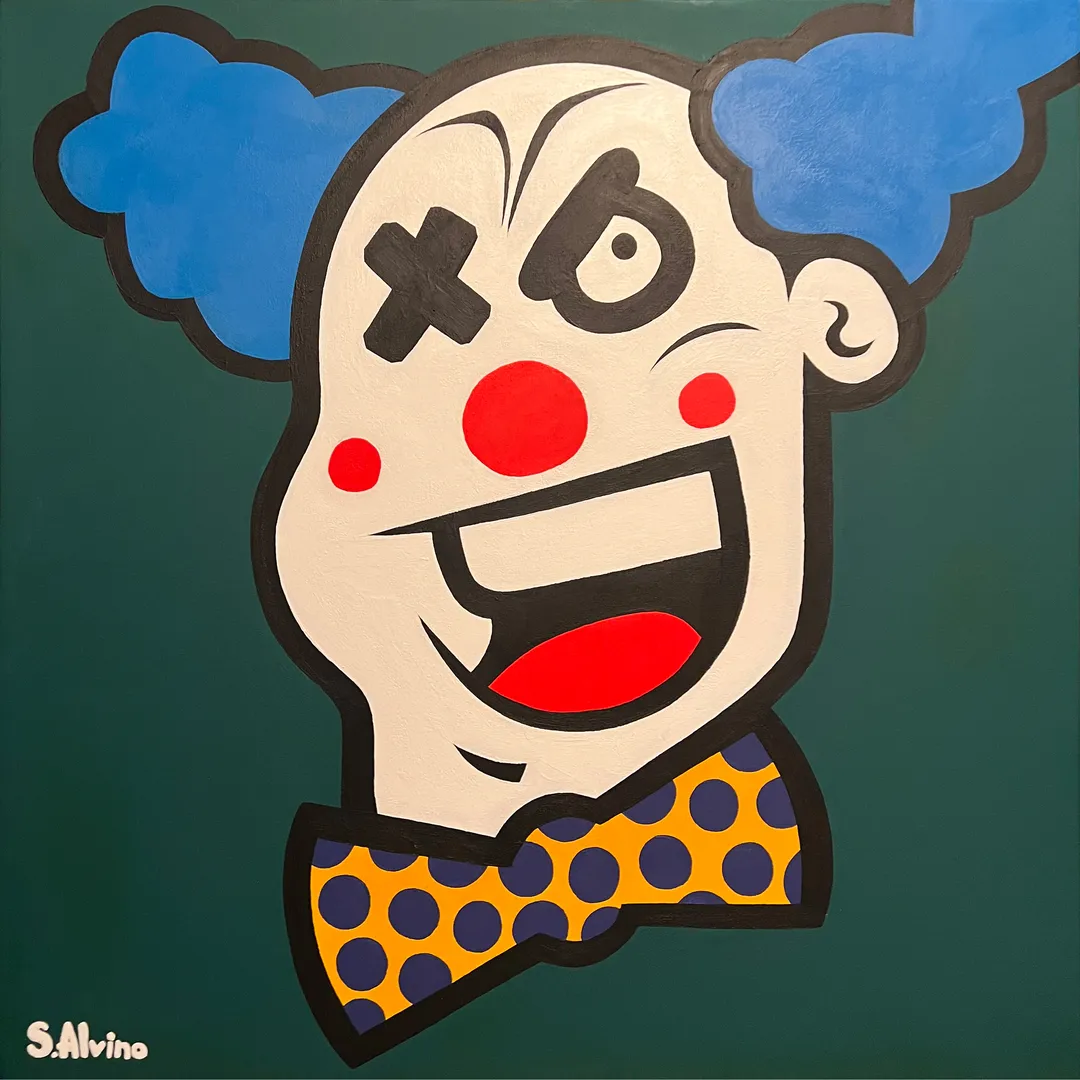
60 x 60 cm / 2025
Acrylic on canvas
The clown is a universal and timeless figure, rooted in collective folklore and immediately recognizable. Behind the forced smile and playful aesthetic, it embodies the ambiguity between entertainment and unease, becoming a symbol of an eternal mask that reflects the contradictions of human nature.
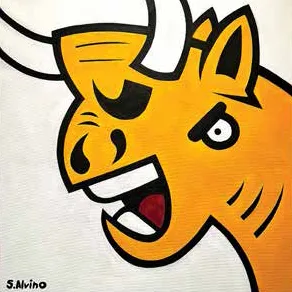
The rhinoceros gives up its horn, its only weapon, and chooses to lay down arms by rejecting force as a means of domination. Disarmament becomes a reflection on the conscious choice of non-violence as a radical and political act. Disarmament as an act of universal love.

60 x 80 cm / 2025
Acrylic on canvas
Exhibited at Palazzo Pellicioli, Alzano Lombardo, former historic town hall
The rhinoceros gives up its horn, its only weapon, and chooses to lay down arms by rejecting force as a means of domination. Disarmament becomes a reflection on the conscious choice of non-violence as a radical and political act. Disarmament as an act of universal love.
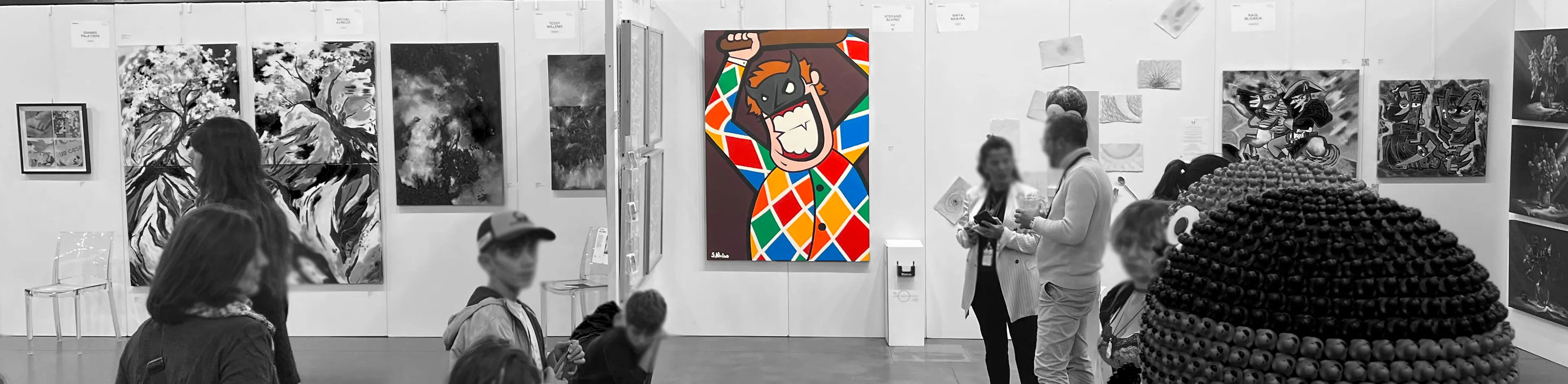
Harlequin, an iconic figure of European tradition, has its roots in the dark identity of Alichino, a demon from medieval folklore cited by Dante among the Malebranche of Hell. Behind the bright colors, the mask reveals an ambiguous nature, symbol of the thin boundary between seduction and deception, light and darkness.
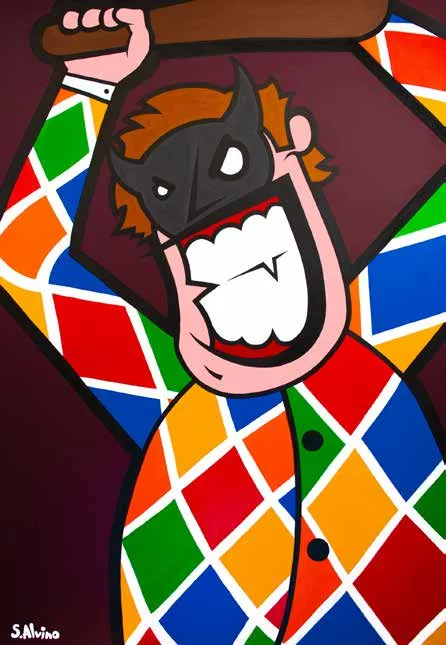
120 x 170 cm / 2025
Acrylic on canvas
Exhibited at the Florence Biennale 2025
Exhibited at Palazzo Pellicioli, Alzano Lombardo, former historic town hall, 2025
Harlequin, an iconic figure of European tradition, has its roots in the dark identity of Alichino, a demon from medieval folklore cited by Dante among the Malebranche of Hell. Behind the bright colors, the mask reveals an ambiguous nature, symbol of the thin boundary between seduction and deception, light and darkness.
Gazzernica reinterprets Picasso’s bull from Guernica as a universal symbol of the violence of war. By bringing that icon into the present, the work connects the tragedy of 1937 with the conflict in Gaza, highlighting how civilian suffering remains unchanged over time. A visual denunciation of the historical repetition of horror.
60 x 60 cm / 2025
Acrylic on canvas
Gazzernica reinterprets Picasso’s bull from Guernica as a universal symbol of the violence of war. By bringing that icon into the present, the work connects the tragedy of 1937 with the conflict in Gaza, highlighting how civilian suffering remains unchanged over time. A visual denunciation of the historical repetition of horror.
Godzilla is chosen as a symbolic animal and a figure of contemporary folklore, transformed into an urban legend of New York. A mythological creature and collective icon, it embodies the fears and contradictions of the city, and was conceived for the New York exhibition at Galleria Azzurre.
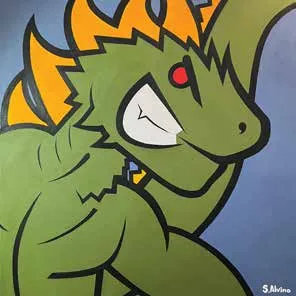
60 x 60 cm / 2025
Acrylic on canvas
Exhibited at Galeria Azur, New York, Manhattan, 2025
Godzilla is chosen as a symbolic animal and a figure of contemporary folklore, transformed into an urban legend of New York. A mythological creature and collective icon, it embodies the fears and contradictions of the city, and was conceived for the New York exhibition at Galleria Azzurre.
Il Silvione (Gold Version) transforms an iconic and immediately recognizable figure into a totemic image, suspended between power and veneration. The use of gold amplifies the theme of image worship and the sacralization of power, questioning the boundary between pop icon and political symbol. The work was exhibited in New York at Galeria Azur.

50 x 50 cm / 2025
Acrylic on canvas
Exhibited at Galeria Azur, New York, Manhattan, 2025
Il Silvione (Gold Version) transforms an iconic and immediately recognizable figure into a totemic image, suspended between power and veneration. The use of gold amplifies the theme of image worship and the sacralization of power, questioning the boundary between pop icon and political symbol. The work was exhibited in New York at Galeria Azur.
The Alien is an iconic painting inspired by the language of graphic design and logos, in which the alien figure becomes a symbol of otherness and being outside the system. The work functions as a conceptual self-portrait: a gaze upon a world perceived as alienated, leading the artist to recognize himself as alien to the reality surrounding him.

100 x 100 cm / 2024
Acrylic on canvas
The Alien is an iconic painting inspired by the language of graphic design and logos, in which the alien figure becomes a symbol of otherness and being outside the system. The work functions as a conceptual self-portrait: a gaze upon a world perceived as alienated, leading the artist to recognize himself as alien to the reality surrounding him.
The sheep represents good in a symbolic sense, but with a direct and defiant gaze. It continues to eat its grass, indifferent to judgment, claiming a form of conscious and autonomous innocence.
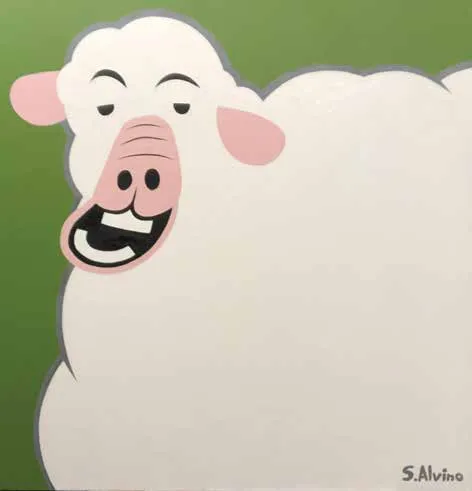
100 x 100 cm / 2024
Acrylic on canvas
The sheep represents good in a symbolic sense, but with a direct and defiant gaze. It continues to eat its grass, indifferent to judgment, claiming a form of conscious and autonomous innocence.
The devil embodies evil in an iconic and explicit form, reinterpreted through a street language inspired by 1990s graffiti. A direct and pop image that does not hide, but openly manifests itself.
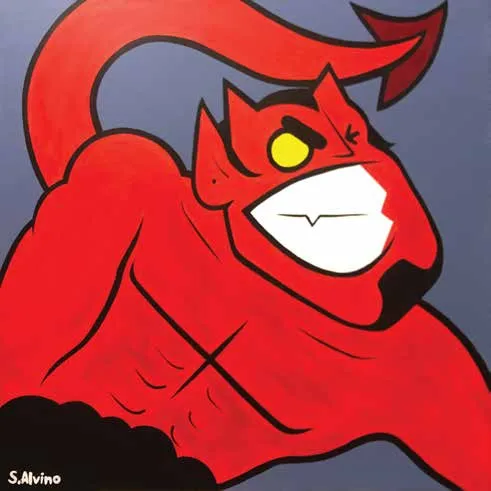
100 x 100 cm / 2024
Acrylic on canvas
The devil embodies evil in an iconic and explicit form, reinterpreted through a street language inspired by 1990s graffiti. A direct and pop image that does not hide, but openly manifests itself.
Bergaraffa was created as a live art intervention on a professional FERCAM crate, made available by Street Level Gallery in Florence for a collateral project of the 2023 Florence Biennale. The artwork depicts a monumental giraffe, nearly three meters tall, painted using the red and yellow of Bergamo, transforming the city’s identity colors into visual memory of the Covid-19 period. The crate, originating from the Musical Museum of Rome and normally used for the transport and preservation of artworks, becomes an artwork itself, merging function, institutional history, and contemporary painterly gesture.
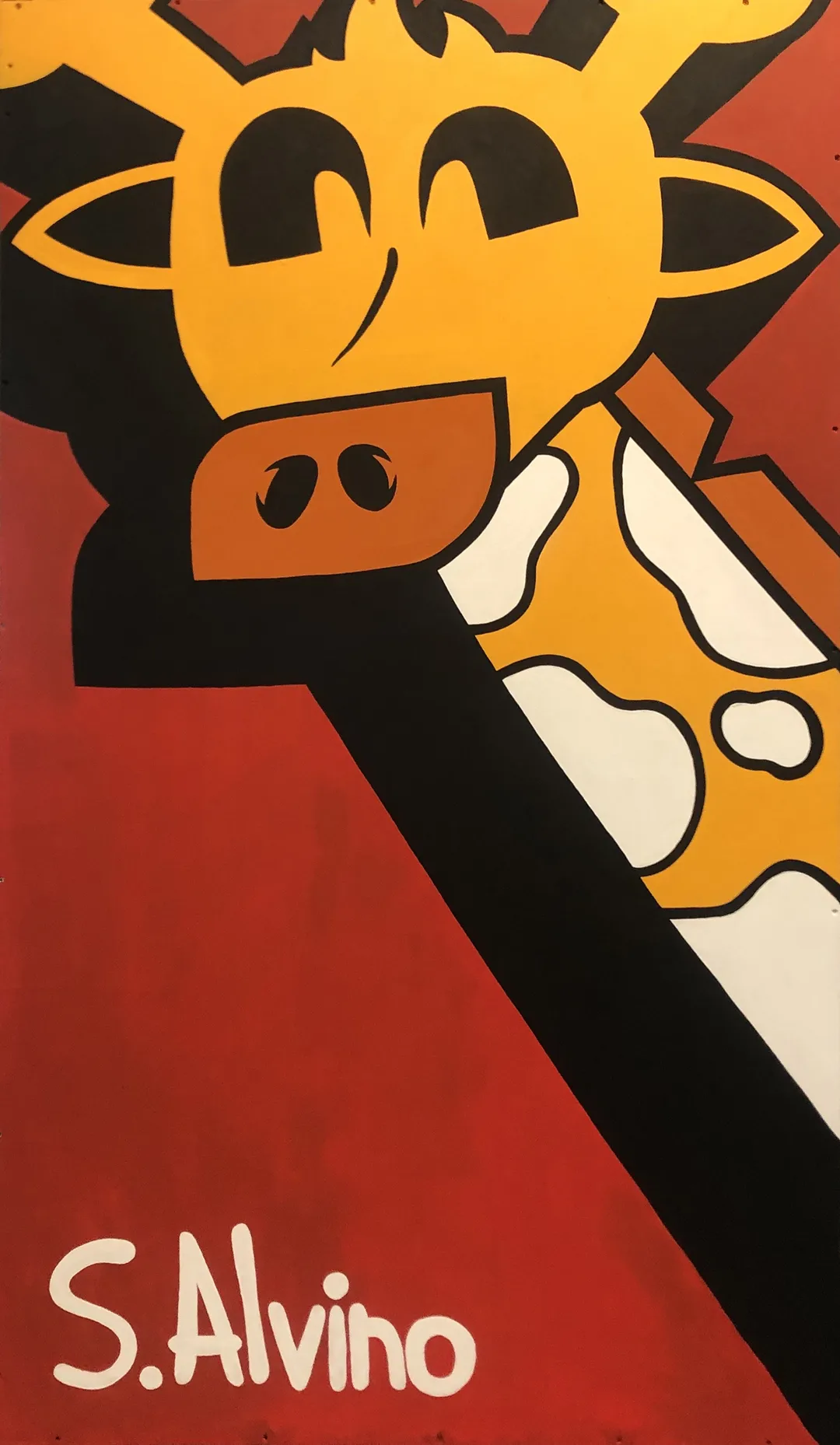
133 x 236 cm / 2023
Acrylic on wood
LIVE ART at the Florence Biennale 2023
Bergaraffa was created as a live art intervention on a professional FERCAM crate, made available by Street Level Gallery in Florence for a collateral project of the 2023 Florence Biennale. The artwork depicts a monumental giraffe, nearly three meters tall, painted using the red and yellow of Bergamo, transforming the city’s identity colors into visual memory of the Covid-19 period. The crate, originating from the Musical Museum of Rome and normally used for the transport and preservation of artworks, becomes an artwork itself, merging function, institutional history, and contemporary painterly gesture.
A monkey looks at itself in the mirror and, failing to recognize itself, identifies as an elephant. The work is a modern diptych composed of two independent canvases. The commercial color palette - yellow and blue with a red accent - is designed for large exhibition spaces and recalls the language of contemporary branding, a theme reflecting today’s youth.
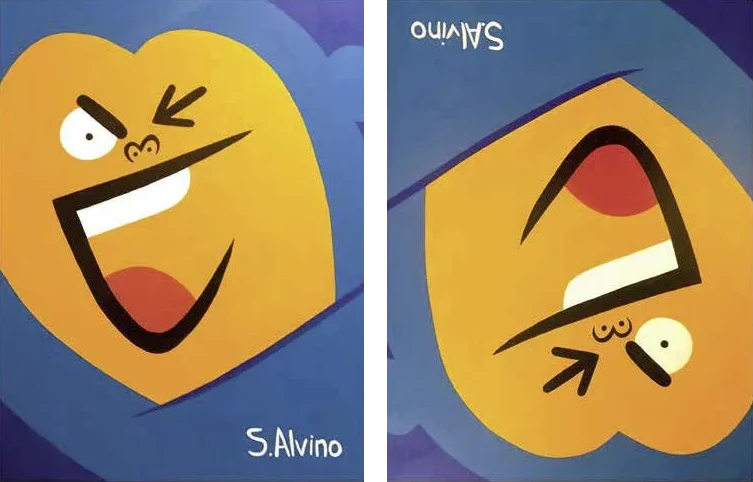
280 x 180 cm / 2023
Modern diptych - Acrylic on canvas
Exhibited at the Florence Biennale 2023
Exhibited at Palazzo Pellicioli, Alzano Lombardo, former historic town hall, 2023
A monkey looks at itself in the mirror and, failing to recognize itself, identifies as an elephant. The work is a modern diptych composed of two independent canvases. The commercial color palette - yellow and blue with a red accent - is designed for large exhibition spaces and recalls the language of contemporary branding, a theme reflecting today’s youth.
The Monkey’s Smile originates from the extraction and stylization of the most primordial sign in Stefano Alvino’s imagery: the iconic smile of the monkey, present since his earliest works. Reduced to a symbol, it recalls the language of logos and also references the Rolling Stones tongue iconography, an image imprinted in the artist’s childhood memories. The teeth in gold leaf, applied on a red base using a technique inspired by Italian Baroque tradition, transform the sign into a bridge between personal memory, pop culture, and historical craftsmanship.
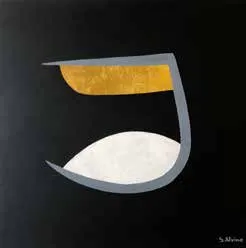
50 x 50 cm / 2021
Acrylic and gold leaf on wood
The Monkey’s Smile originates from the extraction and stylization of the most primordial sign in Stefano Alvino’s imagery: the iconic smile of the monkey, present since his earliest works. Reduced to a symbol, it recalls the language of logos and also references the Rolling Stones tongue iconography, an image imprinted in the artist’s childhood memories. The teeth in gold leaf, applied on a red base using a technique inspired by Italian Baroque tradition, transform the sign into a bridge between personal memory, pop culture, and historical craftsmanship.
The giraffe introduces an elevated perspective, distant and seemingly serene. With its raised gaze, it observes the human world with ironic superiority, becoming a symbol of those who see farther yet choose not to intervene, a silent part of a shared animal narrative.
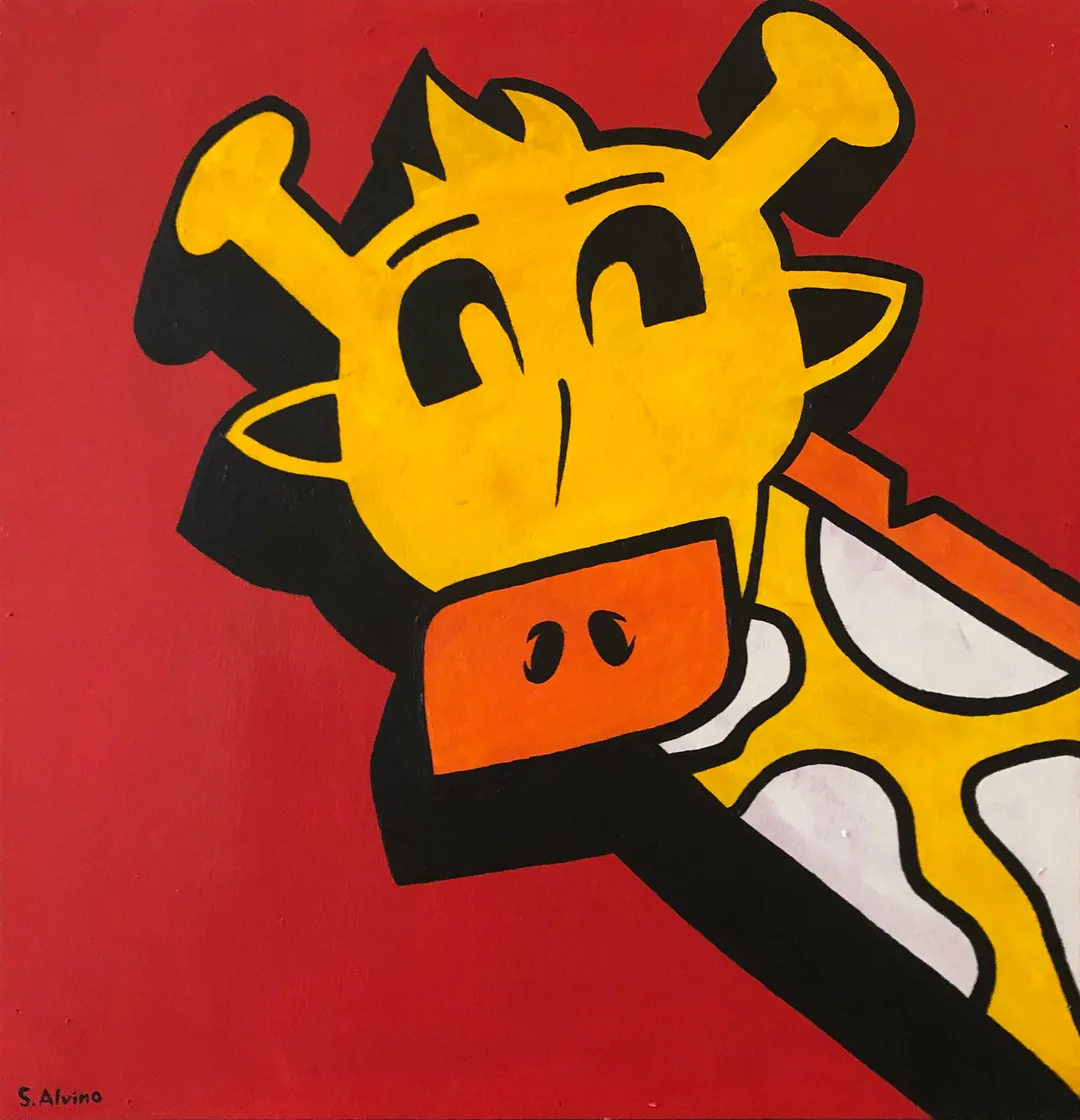
50 x 50 cm / 2021
Acrylic on wood
The giraffe introduces an elevated perspective, distant and seemingly serene. With its raised gaze, it observes the human world with ironic superiority, becoming a symbol of those who see farther yet choose not to intervene, a silent part of a shared animal narrative.
The pufferfish embodies defense as an instinctive reaction: a creature that expands, inflates, and protects itself. Smiling yet ambiguous, it represents extreme adaptation to a hostile environment, suggesting a survival strategy in response to human pressure and threat.
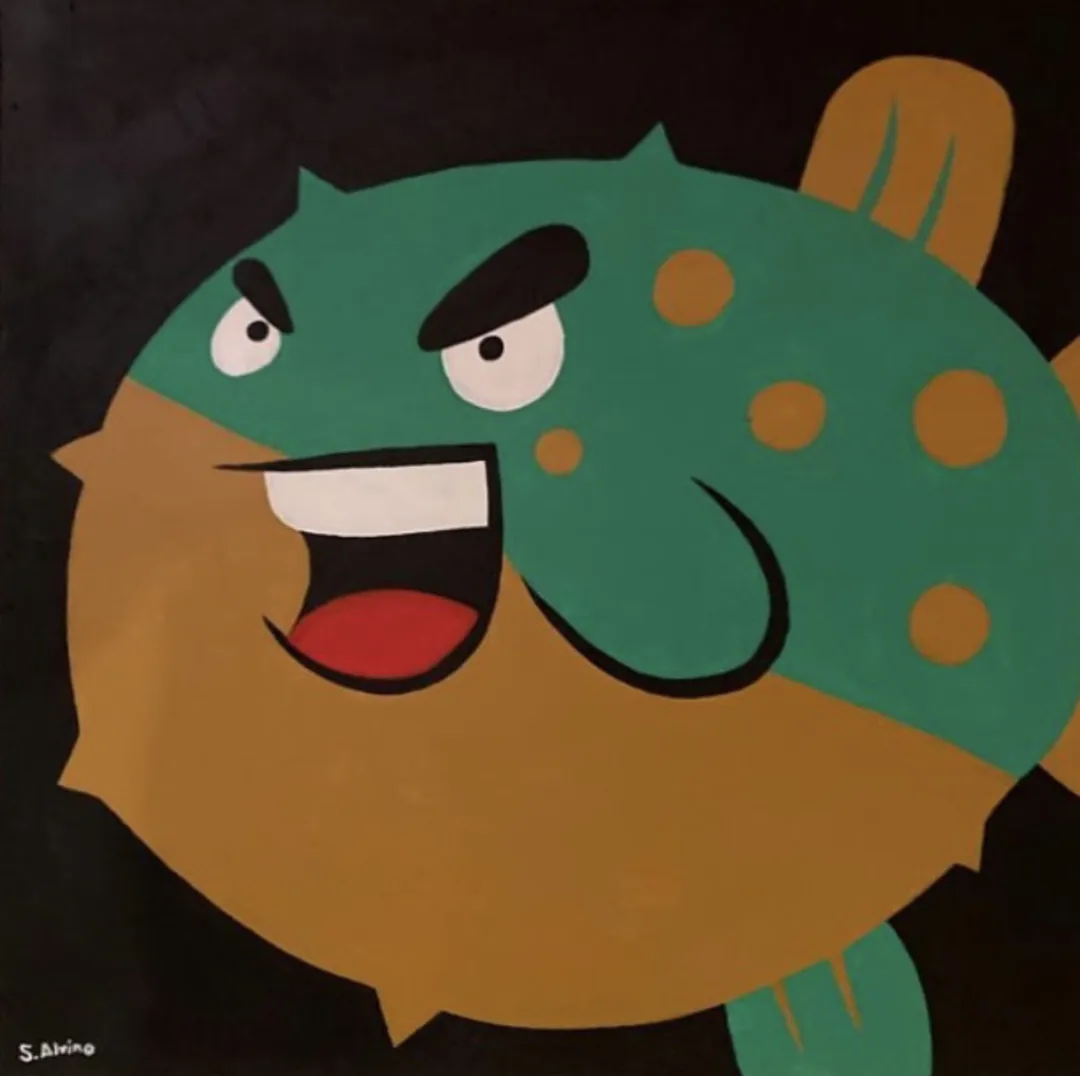
50 x 50 cm / 2021
Acrylic on wood
The pufferfish embodies defense as an instinctive reaction: a creature that expands, inflates, and protects itself. Smiling yet ambiguous, it represents extreme adaptation to a hostile environment, suggesting a survival strategy in response to human pressure and threat.
The penguin further expands Alvino’s visual vocabulary with a completely different structure. In dialogue with the other animals, it becomes part of a symbolic reading that observes and judges humanity’s destructive actions toward the planet.
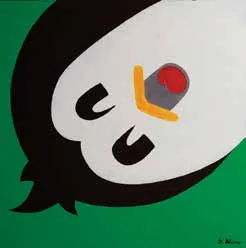
50 x 50 cm / 2020
Acrylic on wood
The penguin further expands Alvino’s visual vocabulary with a completely different structure. In dialogue with the other animals, it becomes part of a symbolic reading that observes and judges humanity’s destructive actions toward the planet.
The whale appears as a monumental and ancient presence, a silent witness to the planet’s history. Its figure suggests memory, resilience, and awareness, reinforcing the idea of an animal alliance observing humanity and its destructive actions from a deep, millennia-old perspective.
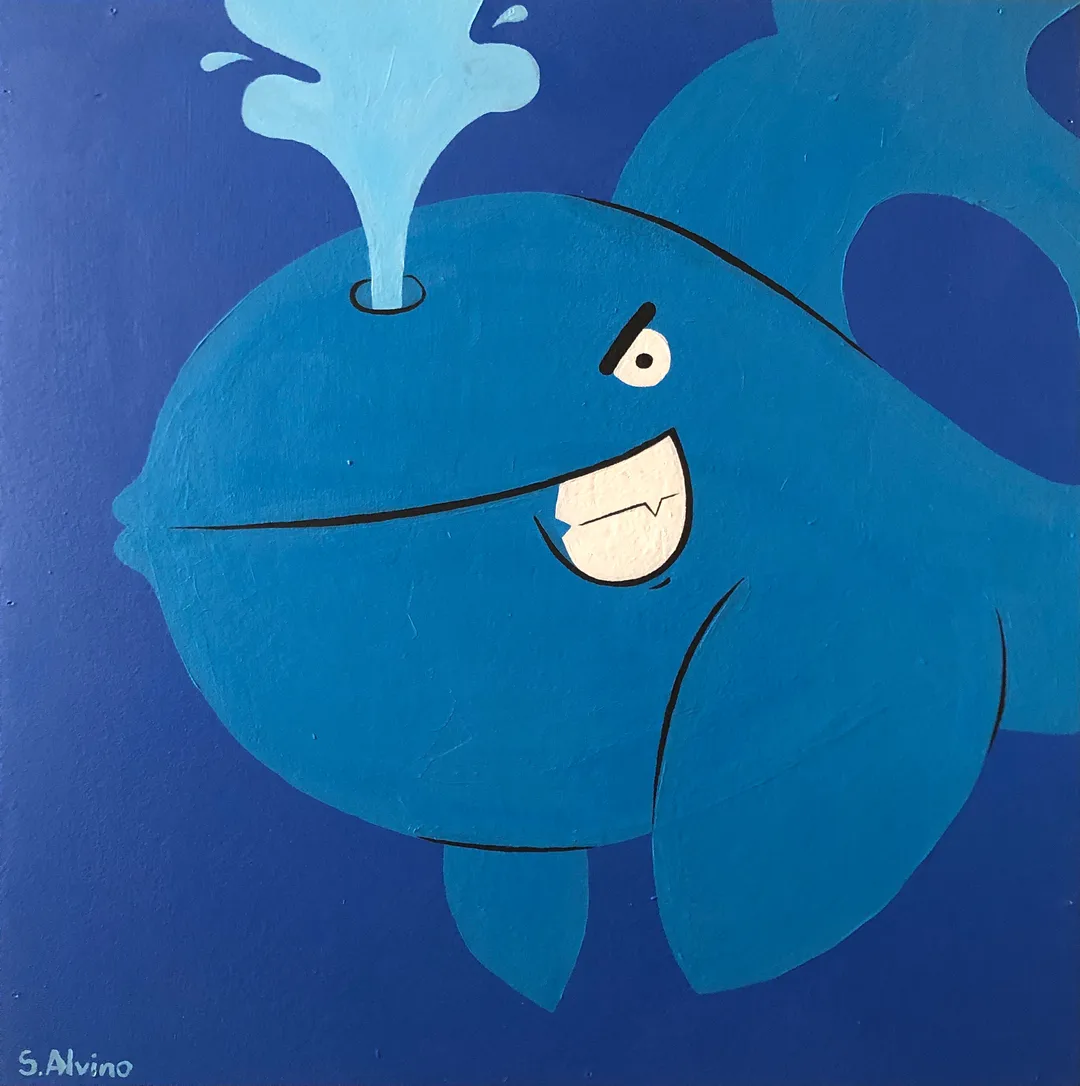
50 x 50 cm / 2020
Acrylic on wood
The whale appears as a monumental and ancient presence, a silent witness to the planet’s history. Its figure suggests memory, resilience, and awareness, reinforcing the idea of an animal alliance observing humanity and its destructive actions from a deep, millennia-old perspective.
The beaver combines a recognizable physiognomy with the iconic smile of the monkey, creating a hybrid figure. The work suggests a narrative complicity among animals, introducing the idea of a shared imaginary.
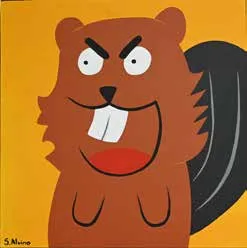
50 x 50 cm / 2020
Acrylic on wood
The beaver combines a recognizable physiognomy with the iconic smile of the monkey, creating a hybrid figure. The work suggests a narrative complicity among animals, introducing the idea of a shared imaginary.
Lorem ipsThe donkey marks a phase of evolution in the artist’s language, allowing greater freedom in line and figure construction. While maintaining continuity with the monkey, it opens toward a deeper formal awareness.um dolor sit amet, consectetur adipiscing elit. Suspendisse varius enim in eros elementum tristique.
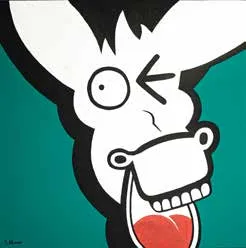
50 x 50 cm / 2020
Acrylic on wood
The donkey marks a phase of evolution in the artist’s language, allowing greater freedom in line and figure construction. While maintaining continuity with the monkey, it opens toward a deeper formal awareness.
The first subject of Stefano Alvino’s research, the monkey was born within the context of graffiti and developed over many years before transitioning to painting on canvas. A foundational figure in his imagery, it introduces an ironic and critical perspective on the human world.
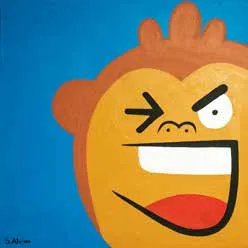
50 x 50 cm / 2020
Acrylic on wood
The first subject of Stefano Alvino’s research, the monkey was born within the context of graffiti and developed over many years before transitioning to painting on canvas. A foundational figure in his imagery, it introduces an ironic and critical perspective on the human world.

THE ARTIST
Stefano Alvino (born in Bergamo, 1992) is a painter and visual artist recognized by art critic Carlo Franza as the initiator and leading voice of Post-Street Art, one of the most relevant and innovative expressions of contemporary art today.
His artistic practice originates in street art and graphic design, later evolving into an autonomous pictorial language that transcends the boundaries of urban art and fully enters the contemporary art system, engaging with galleries, institutions, and major international exhibitions.
According to Franza, Alvino represents a generational turning point, capable of transforming the visual codes of street art into a cultivated, symbolic, and multilayered form of painting while maintaining a strong narrative and social tension. His works intertwine popular imagery, European folklore, literature, and contemporary critique, generating ambiguous and unsettling figures that reflect the contradictions of the present time.
Alvino has exhibited internationally, including in New York, at a gallery located near the former Twin Towers site. At the XV Florence Biennale (2025), he presents The Demon Harlequin, a work inspired by an ancient legend originating in northern France and later spreading across various European regions, as well as by the figure of Alichino from Dante Alighieri’s Divine Comedy.
A decisive moment in Stefano Alvino’s artistic trajectory occurs with the arrival of Francesco Bombelli, a long-time friend and now his agent, who supports and guides the artist toward a more structured and institutional phase of his career. This collaboration marks Alvino’s transition to a new level of professional maturity, culminating in the realization of a solo exhibition in Florence, organized by Carlo Franza, which firmly establishes Alvino as one of the most distinctive and compelling voices in the contemporary Italian art scene.

THE MANAGER
Francesco Bombelli is an art agent and project manager with a background in organizational leadership and institutional relations.
His professional experience spans complex project management and long-term strategic coordination across different sectors.
As Stefano Alvino’s agent, he supports the artist’s transition toward a more structured and international phase, overseeing professional development and institutional positioning.
Their collaboration is based on a shared vision and a long-standing relationship, combining artistic research with strategic and managerial rigor.